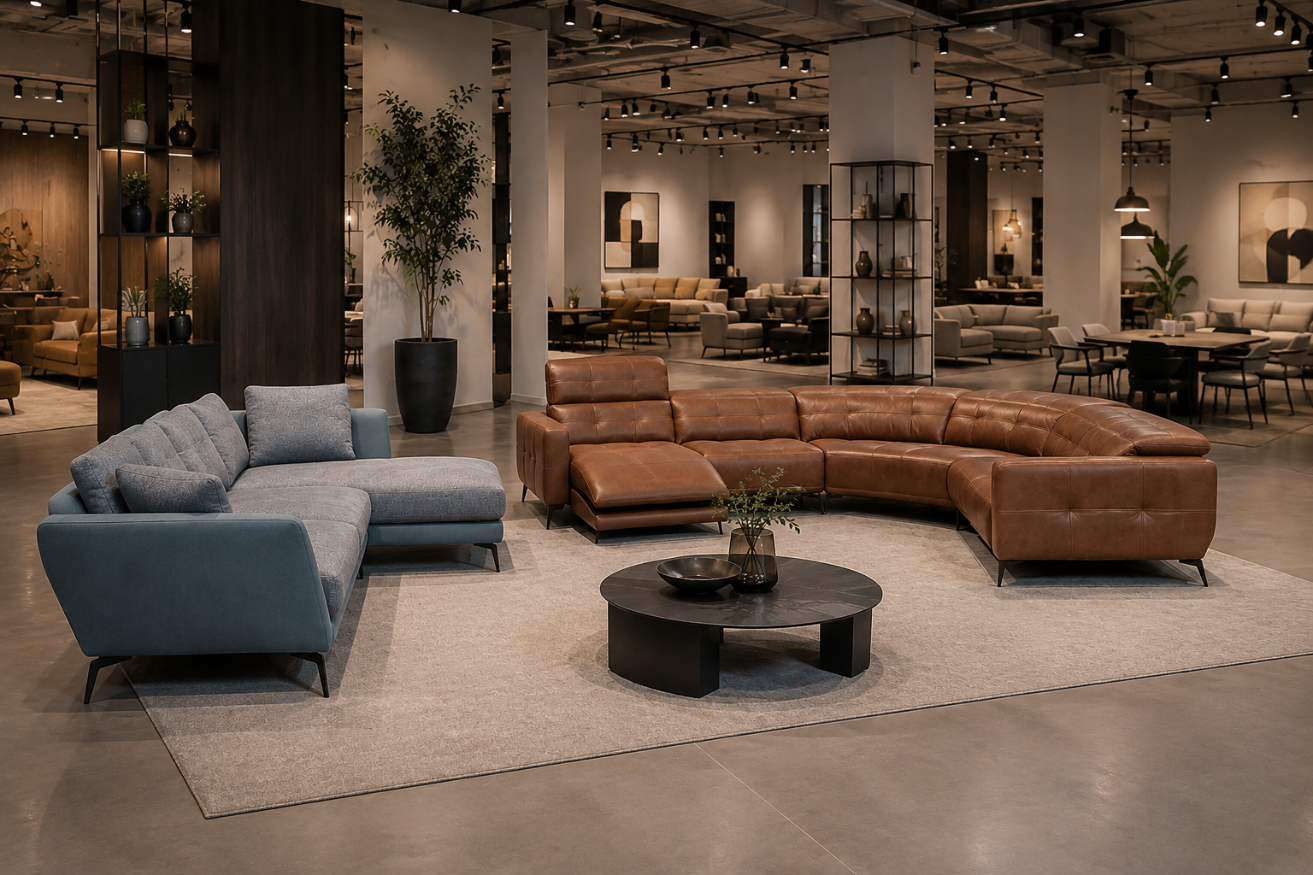
Choosing upholstery for a sectional means balancing the way your home looks with the way it lives. A family room, entertaining space, and quiet reading area each place different demands on a sofa. From everyday wear to sunlight, spills, and the feel you want under your hand. The right material should complement the scale and character of your sectional sofas while supporting long-term comfort.
Start with the qualities that make leather such a compelling choice: its ability to bring warmth, polish, and a distinctive sense of age to a contemporary living space. Book your free design consultation to find the right sectional upholstery for your lifestyle.
The best sectional sofa material for your home depends on your routine, maintenance preferences, and design goals. Choose leather for a refined surface that develops character, performance fabric for stain and moisture resistance, velvet for tactile luxury, or linen and cotton blends for breathable softness. Compare durability, care requirements, light exposure, pets, and children before choosing a sectional upholstery.
Leather brings a distinctive combination of structure, comfort, and visual depth to a sectional. Unlike upholstery that can look unchanged from the day it leaves the showroom, quality leather often develops a unique patina as it is used. This gradual change can soften the surface and give the piece a more personal character, especially in a living room designed around natural materials and enduring Italian style.
Durability is one of leather's strongest advantages. It does not pill in the same way many woven fabrics can, so its smooth appearance remains easier to preserve through regular use. That makes it especially appealing for a sectional that serves as the household's main gathering place. Explore EuroHome's sectional sofas to compare silhouettes, proportions, and configurations before choosing an upholstery finish.
Leather can also be a practical choice for households concerned about dust and pet dander. Because the surface does not trap these particles like some textiles, it can be wiped clean more easily. The Mayo Clinic similarly recommends easy-to-clean furniture materials such as leather when planning an allergy-conscious home. This does not eliminate allergens, but it can support a simpler cleaning routine when paired with regular dusting and vacuuming.
Leather is not maintenance-free. Dust the surface gently, clean spills promptly with the method recommended for the specific hide, and avoid placing the sectional in harsh, direct sunlight. Conditioning every six to twelve months can help prevent the upholstery from drying out or cracking. Although the ideal schedule depends on the leather type, room conditions, and manufacturer guidance. Our guide to leather furniture care offers a more detailed routine.
Color and finish also matter in an active home. Dark leather can show scratches more clearly, including marks from pet claws. Lighter or distressed leather may make those everyday signs less conspicuous, while a household without pets may prioritize a smooth, deep-toned finish for its dramatic presence. Consider how you live, not only how the sample looks under showroom lighting. With the right care and finish, leather can become more beautiful with use rather than simply showing its age.
A sectional often becomes the most-used seat in the home. It is where children watch movies, pets curl up, guests gather, and everyday life unfolds. Because sectionals serve as a central hub for family activities, choosing a high-durability upholstery is especially important. Sectional sofas upholstered in performance fabric offer a polished look while making daily maintenance more manageable.
Performance fabrics are engineered to resist stains, moisture, and wear from children, pets, and regular use. Many are treated to repel liquid spills, giving you time to blot a drink or wipe away a mess before it reaches the cushion core. This moisture resistance is useful for busy households, although it does not replace prompt cleaning or the care instructions supplied with the sofa.
Microfiber is one practical example. It is resilient, easy to clean, and resistant to pilling, which helps preserve a smooth, tailored appearance in high-traffic rooms. High-quality performance fabrics are also tested for pilling, a common concern with standard woven upholstery. The result is a material that supports relaxed living without making the sectional feel overly casual.
For families with active children, stain resistance can reduce the stress of ordinary spills and snack-time accidents. Pet owners may also appreciate an upholstery surface that is easier to vacuum and clean than a delicate, loosely woven textile. Choose a fabric with a texture and color that complement your room, then follow the manufacturer's cleaning guidance rather than applying an untested product.
Performance upholstery is not only about cleanup. Many engineered fabrics offer excellent resistance to UV-related fading, helping a sectional retain its color in a sunlit living room or near large windows. This can be particularly valuable when the seating is a visual focal point and replacing or re-covering it would be disruptive.
For many busy families, performance fabric is a modern choice because it balances durability, easy care, comfort, and contemporary style. Review the fabric's construction and care requirements before deciding, since performance levels vary between collections.
Velvet brings depth, softness, and a subtle sense of drama to a sectional sofa. Its light-catching surface can make a generous seating arrangement feel more layered and intentional, especially in rich jewel tones, warm neutrals, or quietly sophisticated earth tones. The result is polished without feeling overly formal, making velvet a natural fit for contemporary living rooms designed for both entertaining and everyday comfort.
The important distinction is construction. High-quality velvet can be durable when its fibers are tightly woven, rather than loosely tufted or delicate. A dense, consistent weave helps the upholstery hold its surface through regular use while preserving the plush hand that makes velvet appealing. For a sectional that anchors movie nights, conversation, and relaxed gatherings, look beyond color and ask about the fabric's fiber content, weave, and care requirements.
Modern performance velvets have helped change the assumption that velvet is difficult to live with. Textile advances now offer options that retain the material's luxurious appearance while making routine care more manageable. According to industry upholstery guidance, performance velvet is increasingly popular because it combines a modern aesthetic with surprisingly easy maintenance.
That practicality is particularly valuable on a sectional, where more seats mean more points of contact and more opportunity for everyday wear. Follow the manufacturer's cleaning instructions, address spills promptly, and use gentle, upholstery-safe care. Regular attention keeps the surface looking considered without turning maintenance into a daily chore.
When comparing a velvet vs leather sofa, consider the atmosphere you want as well as your routine. Leather offers a smoother, more tailored character, while velvet adds tactile richness and color depth. For homeowners who want a sectional to feel inviting, expressive, and refined, performance velvet offers a compelling balance of luxury and livability.
Natural and blended fabrics bring warmth, softness, and visual texture to a sectional. They are especially appealing in contemporary interiors where comfort matters as much as a tailored silhouette.
Cotton has an inviting hand and a naturally breathable feel, making it comfortable in every season. Its relaxed character suits casual living rooms and homes that favor tactile, approachable materials. However, cotton does not offer the built-in stain resistance of a performance textile, so spills may require faster attention.
Linen creates an airy, relaxed look that works beautifully with European and coastal-inspired design. It is breathable and develops an appealingly lived-in character, but it wrinkles more readily than synthetic materials. Linen's natural texture is a strength when you want an informal room, not a perfectly pristine one.
A linen-polyester blend offers a useful middle ground. The linen contributes texture and softness, while polyester can improve strength and resistance to wrinkling. This balance makes a blend worth considering for a frequently used sectional when you want natural visual appeal without accepting quite as much maintenance.
Chenille is valued for its soft, velvety surface and subtle dimensional texture. It can make a large sectional feel especially welcoming and adds depth to solid colors. Because chenille constructions vary, inspect the weave, review the care label, and ask about cleaning and abrasion performance before choosing it for a high-traffic room.
Performance fabrics are generally the more forgiving option for households managing spills, moisture, children, or pets. They are engineered to resist stains, moisture, and wear, while some are treated to repel liquid before it reaches the cushion core. Leather offers a different design language: it resists pilling and can develop a distinctive patina, but it does not provide the woven softness of cotton, linen, or chenille. Explore EuroHome's sectionals to compare silhouettes, then choose the upholstery that best fits both your aesthetic and your daily routine.
There is no single best sectional sofa material for every home. The right choice depends on how you live, the look you want, and how much maintenance fits your routine. Use this comparison as a starting point, then review the specific fiber content, weave, finish, and care instructions for the sectional you are considering.
| Material | Durability | Stain Resistance | Maintenance | Best For | Price Range |
|---|---|---|---|---|---|
| Leather | High; resists pilling and develops a patina | Good surface resistance, but spills should be wiped promptly | Dust regularly; condition about every 6-12 months | Refined rooms, allergy-conscious homes, and long-term design appeal | High |
| Performance Fabric | High; engineered for daily wear, pets, and children | Excellent; many finishes repel moisture and spills | Routine vacuuming and manufacturer-approved spot cleaning | Busy households, entertaining, and high-use family rooms | Moderate to high |
| Velvet | Moderate to high when tightly woven and well constructed | Moderate; performance velvet improves everyday resilience | Vacuum gently and follow the fabric care code | Statement seating and sophisticated contemporary interiors | Moderate to high |
| Cotton/Linen | Moderate; depends heavily on weave and blend | Low to moderate without a protective finish | Frequent care; expect linen to wrinkle more readily | Relaxed, breathable interiors and lightly used seating areas | Moderate |
| Microfiber | High; resilient and resistant to pilling | High, though performance varies by finish and color | Easy routine cleaning with approved methods | High-traffic homes seeking a soft, practical surface | Moderate |
For a more objective durability comparison, ask for the fabric's double-rub count. This test measures how many abrasion cycles a textile withstands before visible wear appears; higher counts generally indicate better suitability for high-traffic settings. Still, the number is not the whole decision. A tightly woven, well-finished fabric can offer a better everyday experience than a specification viewed in isolation. Compare sectionals by construction, comfort, color, and care requirements alongside the upholstery.
The best upholstery is not simply the most luxurious-looking option in the showroom. It is the material that continues to feel comfortable, look considered, and perform well in the way your household actually lives. Use these five steps to narrow the field before you choose among the sectionals that suit your room.
Assess your household. Start with the people, pets, and sensitivities the sectional must accommodate. Leather is naturally hypoallergenic because it does not trap dust or pet dander, and the Mayo Clinic lists leather among easy-to-clean furniture materials for allergy-conscious homes. If children or pets regularly bring spills and messes into the living room, a performance fabric is engineered to resist stains, moisture, and wear.
Determine how intensely the sectional will be used. A sectional that anchors movie nights, homework, naps, and everyday entertaining needs a different upholstery strategy from one reserved for formal conversations. For a daily family hub, prioritize a durable fiber and tight weave. Ask the retailer for the material's performance specifications rather than choosing by color alone.
Match the material to your lifestyle. Choose leather for allergy-friendly elegance, a smooth surface, and a finish that can develop character over time. Select performance fabric for active homes where easy cleanup matters. Velvet can bring depth and a luxurious feel to a lower-traffic room, especially when it is a tightly woven or performance construction. Cotton and linen suit relaxed, breathable interiors, although natural fibers may need more care.
Consider your maintenance commitment. Be honest about the care you will perform. Leather generally needs conditioning every 6 to 12 months to help prevent drying and cracking. Performance fabrics are typically a lower-maintenance choice for busy rooms, while cotton, linen, and velvet require you to follow the maker's cleaning instructions carefully.
Set your budget before falling for a finish. Compare the full ownership experience, including cleaning products, professional care, and the value of a material that fits your routine. There is no universal winner: the best sectional sofa material is the one that balances your budget, design goals, household demands, and willingness to maintain it.
Book your free design consultation to discuss which sectional upholstery best fits your home.
Performance fabric is usually the most practical choice for households with children, pets, or frequent entertaining. Many performance fabrics are engineered to resist stains, moisture, and everyday wear, while treated surfaces can repel spills before they reach the cushion core.
Leather can be a strong option because its smooth surface does not hold dust and pet dander as readily as many upholstered materials. The Mayo Clinic recommends easy-to-clean furniture materials such as leather in allergy-conscious homes.
Ask for the fabric's double-rub rating, which indicates how many abrasion cycles it withstands before showing signs of wear. Fiber content, weave tightness, cushion design, sunlight exposure, and your household's habits also affect how the upholstery performs. Review upholstery fabric standards for a useful comparison framework.
Yes, provided you select a high-quality, tightly woven velvet and are comfortable with its care requirements. Performance velvet can offer a more manageable option for daily living while preserving velvet's rich, directional texture.
Leather typically benefits from conditioning every 6 to 12 months to help prevent drying and cracking. Frequency can vary with climate, sunlight, and use, so inspect the surface regularly and use products recommended for the specific leather finish.
The right material can bring together your room's comfort, character, and everyday practicality. If you would like guidance comparing leather, fabric, velvet, and performance options for your space, book your free design consultation with EuroHome Interiors. Call 610.477.7760 to get started.


