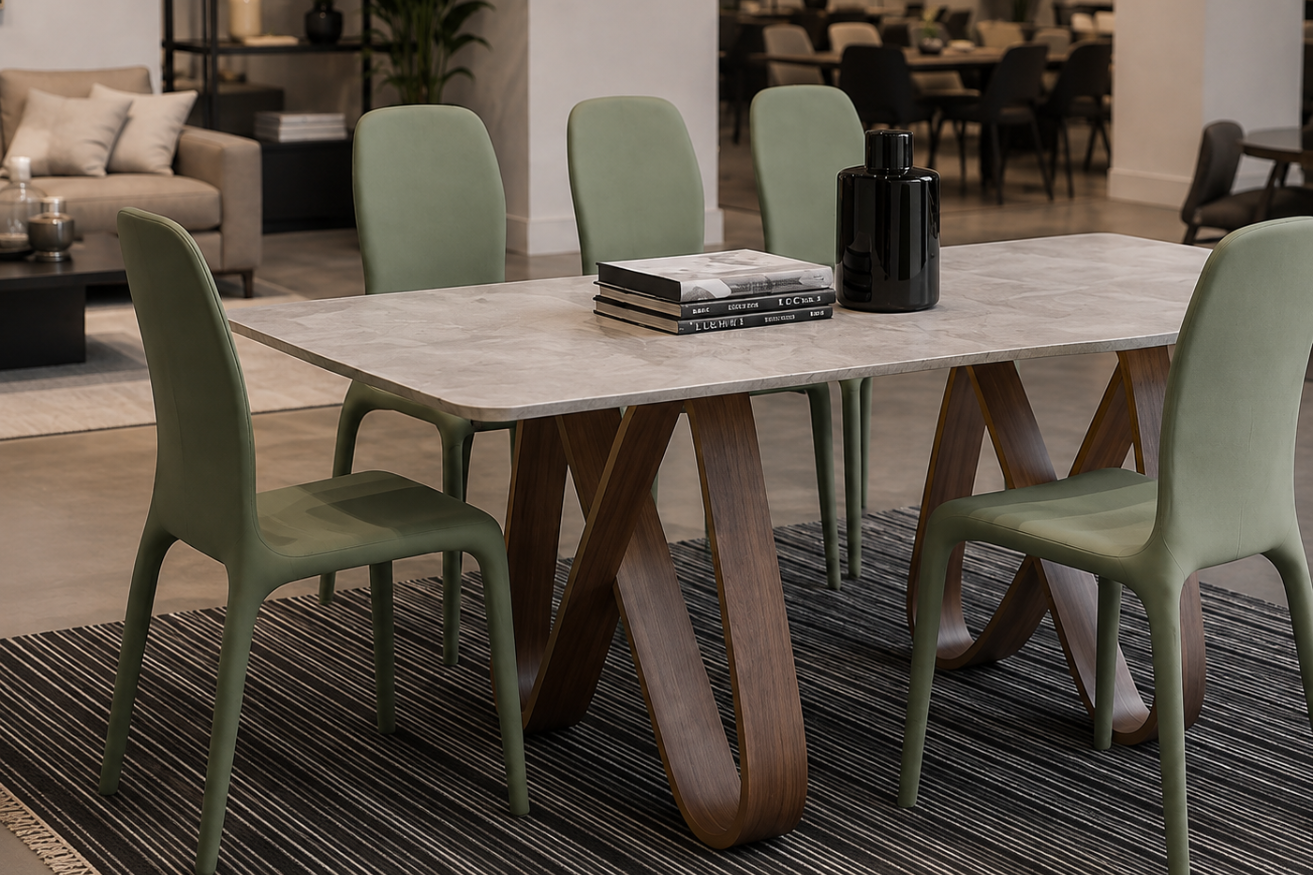
A dining chair does more than fill a seat. It sets the room's visual rhythm, shapes how comfortably guests linger, and must work in proportion to the table beneath it. The most successful choices balance design, dimensions, materials, and the way your household actually uses the dining room.
To learn how to choose dining chairs, start with your table's height, width, and visual weight, then narrow the options by comfort and daily demands. Look for approximately 10 to 12 inches of clearance between the seat and tabletop, a supportive back, and materials suited to your routine. Upholstery, wood, leather, and metal can all perform beautifully when their finish and scale complement the table.
Whether you are furnishing a formal dining room or creating a more relaxed setting for everyday meals, EuroHome's dining chair collection offers a considered starting point. Begin by looking at the table's silhouette and finish, then choose chairs that reinforce its character without competing for attention.
Begin with the character of the table, then choose seating that supports its proportions rather than competing with it. Chair selection should reflect the dining room's broader design theme, whether formal, contemporary, traditional, or relaxed. This approach creates a considered European interior instead of a room assembled from unrelated pieces.
A formal table benefits from chairs with a refined silhouette, such as a gently curved upholstered back, tailored fabric, or elegant detailing. Traditional wood tables can welcome chairs with turned or tapered legs, while a simpler profile keeps the room from feeling overly ornate. Match the level of visual presence to the table's scale. A substantial table needs chairs with enough volume to feel grounded, while delicate chairs can disappear beside a heavy base or thick top. This balance of visual weight is one of the most reliable ways to make a dining arrangement feel intentional.
Pay attention to the legs and finishes as well. The chair legs do not need to be an exact match, but coordinating leg materials or repeating a wood tone elsewhere in the room helps unify the setting. If the table has a warm walnut finish, for example, chairs with complementary wood, leather, or warm upholstery can bridge the pieces without creating a showroom effect.
Modern tables pair naturally with clean-lined chairs in leather, molded materials, or understated upholstery. For a glass table, keep the chair design visually light. Slim frames, open backs, and quiet colors preserve the table's transparency and minimalist character, rather than overwhelming its surface with excessive ornament.
Rustic tables invite more texture and contrast. Consider woven details, tactile upholstery, or a simple wood chair with a finish that complements the table without copying it exactly. In an informal room, mixing chair styles or colors can add personality, provided the proportions remain consistent.
For additional guidance, explore your dining table choice alongside the table's existing finish and architecture. If the surface is porcelain, this guide to dining chair material can help you select a complementary combination.
Comfort begins with proportion. A dining chair should let you sit upright, keep both feet supported on the floor. And leave enough room for your knees without forcing your shoulders toward the table. Before choosing a finish or silhouette, measure both the chair and the table as a pair.
Most dining chairs have a seat height of 17 to 20 inches, while standard dining tables measure approximately 28 to 31 inches from the floor to the tabletop. The most comfortable arrangement typically leaves 10 to 12 inches between the top of the seat and the underside of the tabletop. This clearance gives your knees room to move and accommodates the table apron, which can reduce usable space. Both KING Living's dining chair guide and The Spruce's sizing guidance identify these ranges as practical benchmarks.
Do not rely on height alone. Sit in the chair, if possible, and confirm that your feet rest firmly on the floor. A table with a thick top or deep apron may require a slightly lower seat, while a petite or taller diner may need a different proportion. The goal is a comfortable relationship between the individual, the chair, and the table, not a fixed number applied to every room.
A seat width of 17 to 20 inches suits most adults, but allow more space when the chair has substantial upholstery or arms. Also check seat depth: when seated with your back supported. Leave a 1 to 2 inch gap between the front edge of the seat and the back of your knees. This prevents pressure behind the legs while still providing useful support.
Armchairs can bring welcome support and a more formal presence, but measure their overall height and width before ordering. The armrests should slide fully beneath the table, with enough clearance to tuck the chair away without scraping the apron or forcing it outward. If they cannot fit, use armchairs at the head and foot of the table, or choose an armless design along the sides. Taking these measurements first makes it easier to build an elegant dining arrangement that remains comfortable through a long meal.
The best material depends on how you use the room, how much maintenance you welcome, and the atmosphere you want around the table. For long dinners and frequent entertaining, comfort deserves equal weight with appearance. Upholstered seating and backrests generally provide more comfort than rigid wood, while wood, leather. And modern synthetic materials each offer a distinct balance of durability, care, and visual character.
| Material | Strengths | Considerations | Best suited to |
|---|---|---|---|
| Upholstered | Comfortable for extended meals, with broad options for color, texture, and silhouette. | Choose stain-resistant performance fabrics for busy households. For daily use, look for a high rub count, which indicates stronger abrasion resistance. | Entertaining spaces, dining rooms used for long meals, and interiors where tailored softness matters. |
| Solid wood | Durable, easy to maintain, and naturally suited to classic, Scandinavian, and contemporary interiors. | Rigid seats can feel less comfortable over time, so add a well-made cushion when meals tend to linger. | Families seeking longevity, low-fuss care, and a warm connection to a wood dining table. |
| Leather | Durable, easy to wipe clean, and capable of developing a distinctive patina as it ages. | Natural variation is part of leather's appeal. Select a finish that complements the table rather than competing with its grain or surface. | Refined contemporary rooms, frequent entertaining, and households that value easy everyday maintenance. |
| Metal or acrylic | Clean-lined, durable, and easy to clean, with a sleek modern profile. Acrylic can preserve a visually open feel. | Harder surfaces may benefit from a shaped seat or upholstered insert when comfort is a priority. | Modern dining rooms, compact spaces, and settings that call for a lighter visual footprint. |
Table material should influence the final decision. A richly grained wood chair can create continuity with a wood table, while leather or upholstery can soften a stone, porcelain, or ceramic surface. With a polished porcelain or ceramic table, consider the room's overall temperature: upholstered chairs add warmth, and wood introduces tactile contrast. For more guidance on matching your dining chairs to your table, review the material and proportion considerations in EuroHome's ceramic dining table guide.
There is no universal winner when deciding how to choose dining chairs. Prioritize the material that supports your daily routine, then refine the finish, color, and profile so the chairs feel intentional beside the table. For an additional perspective on dining chair material and durable dining surfaces, compare the care requirements before ordering.
A dining chair should feel supportive without turning the table into a workstation. Look for a neutral sitting position with a slight recline, while the backrest follows the body from the top of the hips through the lower shoulder blades. This balance helps you sit comfortably through a long meal without forcing the spine rigidly upright. UCLA ergonomics guidance recommends considering posture, body shape, and the intended task when evaluating a chair.
Lumbar support matters even in a dining setting. A shaped backrest or gently contoured cushion can reduce strain during extended sitting, particularly when meals become conversations that last well beyond dinner. The chair should support the lower back while allowing the shoulders to relax. Avoid assuming one design suits everyone: body proportions vary, and a chair that feels ideal for one person may place pressure in the wrong areas for another.
The seat angle should encourage an upright dining posture rather than a deep lounge position. Cushion density is equally important. A seat that is too firm can feel unforgiving, while one that is overly soft may allow the body to sink and make it harder to rise. Sit fully back and check that your feet rest firmly on the floor. Leave roughly 1 to 2 inches between the seat edge and the backs of your knees, so circulation is not restricted.
Armrests can add welcome support, especially during leisurely meals, but measure them against the table apron and underside. They must slide under the table when the chair is stored, and they should not narrow the usable seating space. A refined chair is comfortable in use and practical when the room is reset.
Whenever possible, test dining chairs in person. Sit for several minutes, shift naturally, place your feet on the floor, and check whether the backrest supports rather than pushes your spine forward. Try the chair at the intended table, too. This simple evaluation reveals pressure points, awkward angles, and clearance problems that photographs cannot show. Comfort is personal, so thoughtful testing is one of the most reliable steps in choosing a chair you will enjoy for years.
Use your table's length, not just its overall visual scale, to estimate a comfortable seating plan. The following guide, adapted from Emily Henderson's dining chair sizing guide, gives you a practical starting point before you compare chair dimensions and room clearances.
Yes. A dining room can feel more considered when the chairs and table share a visual relationship without being identical. Begin by deciding how formal you want the setting to feel. Matching all chairs creates symmetry and a polished, architectural look, while using distinct chairs at the table ends introduces a curated focal point. This approach works especially well when the end chairs have a stronger silhouette, higher back, or subtle upholstery detail.
Material contrast is another effective way to create depth. Wood chairs can soften the clean transparency of a glass table, while upholstered chairs bring warmth and comfort to a substantial wood table. With glass, keep the chair profile relatively refined so the seating does not overwhelm the table's light visual weight. In every case, balance the visual weight of the chairs against the table's scale rather than selecting pieces by style alone.
Mixed seating looks intentional when at least one detail repeats. Coordinate chair legs with the table legs, or connect different wood tones through another finish in the room. A black or dark metal base, for example, can bridge painted chairs and a darker table. You can also repeat a fabric color in nearby lighting, artwork, or a sideboard. The goal is harmony, not a perfect match.
EuroHome's made-to-order options make this balance easier to achieve. Choose upholstery suited to the room's use, then refine the composition with bicolour finishes that combine complementary tones. This allows you to pair Italian forms with Scandinavian simplicity while maintaining a coherent palette. For more guidance on coordinating European pieces, see our European dining table guide before finalizing your seating.
Before ordering, view the chairs beside the actual table in daylight and from the room's main sightline. A cohesive combination should feel layered, comfortable, and proportionate rather than assembled from unrelated statement pieces.
Current interiors favor dining chairs that combine sculptural form with everyday comfort. Look for refined silhouettes, tactile upholstery, warm wood, and carefully considered contrast rather than a room filled with matching pieces. European collections also make it easier to specify made-to-order upholstery or bicolour finishes, so the chairs feel distinctive while still belonging to the larger dining room design.
Either can work. Choose lighter chairs to soften a substantial table or keep a compact room feeling open. Darker chairs can ground a pale or glass-topped table and add visual depth. The most reliable approach is to repeat one element, such as a wood tone. Metal finish, or upholstery color, while allowing the chair and table to differ in value.
Upholstered side chairs, gently curved backs, clean-lined wood frames, and tailored leather or performance-fabric seats remain versatile choices. The right style depends on the room, table scale, and how you entertain. A well-proportioned chair with supportive back coverage will look considered longer than a novelty shape chosen only because it is currently popular.
Timeless dining chairs have balanced proportions, durable construction, and a silhouette that supports the table rather than competing with it. Consider a simple wood frame, a tailored upholstered seat, or a restrained leather design in a finish that relates to the room. Choose materials you can maintain comfortably, then prioritize fit, comfort, and craftsmanship over short-lived trends.
The right chairs bring comfort, proportion, and a polished sense of cohesion to your dining room. If you are comparing materials, refining the scale, or coordinating chairs with a favorite table, personalized guidance can make the decision feel straightforward.
Schedule your design consultation with EuroHome Interiors to discuss your dining space and next steps.


